
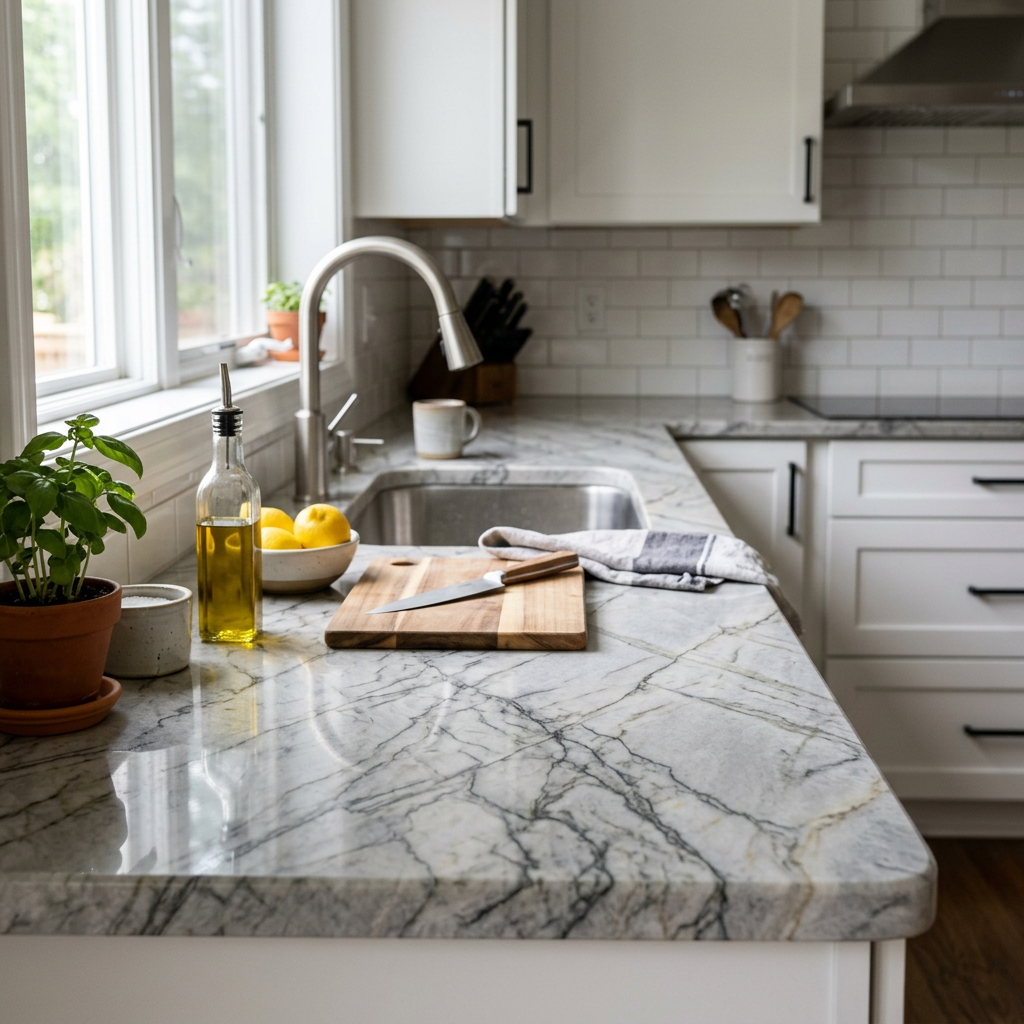
Thinking about stone countertops? Good call. They’re popular for a reason: durability and looks. From a practical standpoint, stone generally holds up well to daily use and adds a certain heft and elegance to a kitchen or bathroom. You’ve got a lot of options, each with its own quirks, benefits, and things to watch out for. Let’s dig into what makes them such a mainstay in home design.
Sure, stone countertops look great, but their appeal goes deeper than just aesthetics. There are some really practical benefits that make them a solid choice for busy households.
Durability and Longevity
This is a big one. Stone, by its nature, is tough. Whether you’re talking granite, quartz, or marble, these materials are designed to withstand a lot of abuse. They resist scratches, chips, and heat better than many other countertop materials. This means you won’t be replacing them anytime soon, which is a big plus for your wallet and your peace of mind.
Increased Home Value
Investing in stone countertops can actually boost your home’s value. When potential buyers walk into a kitchen with gleaming granite or sleek quartz, it signals quality and good taste. It’s an upgrade that pays off, making your home more attractive and commanding a higher price point if you ever decide to sell.
Ease of Maintenance (Mostly)
While some stones require more care than others, generally speaking, stone countertops are pretty easy to live with. A quick wipe-down with a damp cloth is often all it takes to keep them looking good day-to-day. We’ll dive into the specifics of sealing and cleaning for different types later, but the basic upkeep isn’t complicated.
If you’re considering installing stone countertops in your home, it’s essential to understand the importance of proper maintenance to keep them looking their best. For insights on how to effectively seal and protect your stone surfaces, you can read a related article that provides valuable tips and guidance. Check it out here: Sealing and Protecting Stone Countertops. This resource will help you ensure the longevity and beauty of your investment.
Popular Stone Countertop Choices
Alright, let’s talk about the different players in the stone countertop game. Each has its own personality, so understanding the nuances will help you pick the right fit for your home and lifestyle.
Granite: The Classic Workhorse
Granite is probably what most people think of when you say “stone countertop.” It’s been a popular choice for decades, and for good reason. It’s an igneous rock, formed from molten magma, which gives it incredible strength and unique patterns.
Natural Beauty and Variety
Every slab of granite is unique. You’ll find a huge range of colors, from deep blacks and browns to vibrant blues and greens, with flecks and veins that are truly one-of-a-kind. This natural variation is part of its charm; you’re getting something no one else has.
Heat and Scratch Resistance
Granite is incredibly resistant to heat. You can often place hot pans directly on it without worry (though a trivet is still a good idea for prolonged heat exposure or very delicate finishes). It’s also very hard, making it difficult to scratch with normal kitchen use. Knives will dull before they scratch the granite itself.
Porosity and Sealing
Here’s the trade-off: granite is porous. This means it can absorb liquids, leading to stains if not properly sealed. Most granite countertops come pre-sealed, but you’ll need to re-seal them periodically – usually once a year, though some denser granites can go longer. It’s not a difficult process, just something to factor into your maintenance routine.
Quartz: The Engineered Marvel
Often mistaken for a natural stone, quartz countertops are engineered. They’re made by combining crushed quartz crystals (a very hard mineral) with resins, polymers, and pigments. This manufacturing process gives them some distinct advantages.
Non-Porous and Low Maintenance
This is quartz’s superpower. Because it’s engineered, it’s non-porous. This means it doesn’t need sealing, ever. It’s highly resistant to stains from coffee, wine, oil, and most other spills. This makes it a fantastic option for busy families or anyone who wants a “set it and forget it” countertop.
Consistent Appearance
Unlike granite, quartz offers a more consistent look. If you love a specific pattern or color, you can be confident that the slab you choose will closely match the sample. This is great for large installations or if you’re aiming for a very uniform aesthetic.
Wide Range of Colors and Patterns
The engineering process allows for an incredible array of colors and patterns, including those that mimic natural stone like marble, but without marble’s inherent vulnerabilities. You can find everything from solid colors to intricate veining.
Heat Sensitivity (Compared to Granite)
While quartz is heat resistant, it’s generally not as forgiving as granite. The resins in quartz can be damaged by extreme heat, leading to discoloration or scorching. Always use a trivet under hot pots and pans to be safe.
Marble: The Timeless Elegance
Marble is synonymous with luxury and classical beauty. It’s a metamorphic rock, primarily composed of calcite, and its distinctive veining patterns are truly breathtaking.
Unparalleled Aesthetic Appeal
There’s no denying the beauty of marble. Its soft, elegant veining and luminous quality are unmatched. It instantly elevates any space, creating a sophisticated and luxurious atmosphere.
Cool to the Touch
Marble stays naturally cool, which makes it an excellent surface for baking, especially for rolling out dough. If you’re a keen baker, this is a definite perk.
Porosity and Etching
Here’s where marble requires some commitment. It’s a much softer and more porous stone than granite or quartz. It’s prone to etching from acidic substances (lemon juice, vinegar, wine) which can leave dull spots. It also stains more easily if spills aren’t wiped up quickly. Sealing is crucial and often needs to be done more frequently than with granite.
Patina Over Time
Some people embrace the “patina” that develops on marble over time – the slight wear and tear, the subtle etching. They see it as part of the stone’s story and character. Others find it frustrating. It’s a personal preference, but something to be aware of before you commit.
Soapstone: The Understated Charm
Soapstone is a less common but increasingly popular choice, known for its smooth, velvety feel and subtle, understated look. It’s a metamorphic rock primarily composed of talc, giving it its unique texture.
Soft, Warm Feel
Unlike the cold, hard feel of granite or quartz, soapstone has a distinctly soft, almost warm feel to the touch. This makes it very comfortable to work on.
Non-Porous and Stain Resistant
Despite its softness, soapstone is non-porous. This is a huge advantage, as it means it won’t stain from liquids. Wine, oil, coffee – they won’t penetrate the surface.
Scratches and “Patina”
Soapstone is quite soft, so it can scratch and ding relatively easily. However, these marks are part of its character and can be easily sanded out or rubbed away with mineral oil. Many owners appreciate the way soapstone develops a “patina” over time, darkening and deepening in color.
Mineral Oil Treatment
To enhance its natural beauty and even out its color, soapstone requires periodic treatment with mineral oil. This isn’t a sealant but rather a way to bring out its natural dark tones and hide minor scratches.
Important Considerations Before You Buy

Choosing stone countertops isn’t just about picking a pretty slab. There are some practicalities you’ll want to think through to ensure you’re making the right investment for your home.
Budgeting and Costs
Stone countertops are an investment. Prices vary wildly depending on the type of stone, its rarity, the complexity of your kitchen layout, and the fabricator.
Material Costs
Granite typically ranges from mid to high-end, with exotic varieties being more expensive. Quartz is generally comparable to mid-range to high-end granite. Marble can be quite expensive, especially for rare patterns. Soapstone often falls into the mid to high range. Remember, pricing is usually per square foot, and that’s just for the material.
Fabrication and Installation
This is a significant part of the cost. Cutting, polishing, and installing stone requires specialized equipment and skilled labor. Intricate cuts, custom edges, and multiple sink cutouts will add to the fabrication cost. Always get multiple quotes and make sure they include installation.
Sealing and Maintenance Products
Don’t forget the ongoing costs. For granite and marble, you’ll need to factor in the price of sealers. For soapstone, mineral oil. While not huge expenses, they’re part of the long-term ownership.
Edge Profiles and Finishes
The edges and finishes of your stone countertop can dramatically change its look and feel.
Edge Profiles
- Eased/Rounded: A slightly rounded or softened edge, very common and practical.
- Bevel: A cut at an angle, adding a bit of sophistication.
- Bullnose/Demi-Bullnose: A fully rounded or half-rounded edge, giving a soft, traditional look.
- Ogee: A classic, S-shaped curve, often used in more formal designs.
- Laminated: Two pieces of stone are joined to create a thicker, more imposing edge.
Surface Finishes
- Polished: The most common finish, creating a glossy, reflective surface that enhances the stone’s color and veining.
- Honed: A matte, non-reflective finish that gives the stone a softer, more natural look. It can show fingerprints more easily but hides minor scratches well.
- Leathered/Antiqued: A textured finish that has a slightly dimpled or pebbled feel, often achieved by brushing the stone. It’s great for hiding smudges and offers a unique tactile experience.
Environmental Impact
If sustainability is important to you, consider the environmental aspects of your choice.
Sourcing and Transportation
Natural stones like granite, marble, and soapstone are quarried from the earth, often in distant locations. The environmental impact includes quarrying operations and the energy used for transportation.
Engineered Stone Considerations
Quartz, while using a natural material (quartz crystals), involves an industrial manufacturing process. The resins and polymers used are synthetic. However, some manufacturers are moving towards more sustainable practices and using recycled content.
Maintenance and Care Tips

Keeping your stone countertops looking great doesn’t have to be a chore. A little consistent care goes a long way.
Daily Cleaning Routines
For all types of stone, simple daily cleaning is key.
Mild Soap and Water
A soft cloth or sponge with warm water and a small amount of mild dish soap is usually all you need for daily wipe-downs. Avoid harsh, abrasive cleaners or anything with acidic or alkaline properties, as these can damage the stone or break down sealants.
Prompt Spill Cleanup
Especially for granite and marble, wipe up spills immediately. Don’t let liquids sit on the surface, even water, as they can leave rings or penetrate the stone.
Specific Care for Different Stones
Each stone has its own unique care requirements.
Granite Sealing and Protection
As mentioned, regular sealing is crucial for granite. Water test your granite periodically by placing a few drops of water on the surface; if it beads up, your seal is good. If it soaks in, it’s time to re-seal. There are many DIY sealants available, simply follow the product instructions.
Marble Etching Prevention
Avoid acidic substances on marble at all costs. Use cutting boards, trivets, and coasters religiously. If etching occurs, it often requires professional re-honing to remove, or you can choose to embrace the patina.
Quartz Heat Protection
Always use trivets under hot pots, pans, and even slow cookers or griddles. The resins in quartz are susceptible to heat damage, which can manifest as discoloration or scorching that is irreversible.
Soapstone Oil Treatment
For soapstone, periodic applications of mineral oil are important. It helps to deepen the color, hide minor scratches, and give it that even, velvety appearance. You can apply it with a soft cloth, let it soak in for 20-30 minutes, and then wipe off any excess. Do this every few weeks initially, then as needed (perhaps monthly or bi-monthly) once the stone is saturated.
If you’re considering upgrading your kitchen with beautiful stone countertops, you might find it helpful to read about the various options available for maintaining their elegance over time. A related article discusses the importance of proper care and repair for natural stone surfaces, which can significantly extend their lifespan and keep them looking brand new. For more insights on this topic, you can check out this informative piece on natural stone repair.
Final Thoughts
| Stone Countertop Type | Durability | Maintenance | Cost |
|---|---|---|---|
| Granite | Very durable | Requires sealing | Medium-high |
| Marble | Less durable than granite | Requires regular sealing | High |
| Quartz | Extremely durable | Low maintenance | High |
Choosing stone countertops is a significant decision, but with the right information, it doesn’t have to be overwhelming. Each type of stone offers a blend of beauty, durability, and unique characteristics. Whether you’re drawn to the classic resilience of granite, the low-maintenance appeal of quartz, the timeless elegance of marble, or the subtle charm of soapstone, understanding their specific needs will help you select a surface that you’ll love for years to come. Do your research, get samples, and talk to experienced fabricators. Your perfect stone countertop is out there.
Leave a Reply